
Passwords Are Becoming the Weak Link in Business Security
Most people have too many passwords. There is one for email, another for company software, another for banking, another for customer platforms, and several more for tools used throughout the workday. To make things simpler, many employees reuse passwords, save them in browsers, or choose versions that are easy to remember. That may feel convenient, […]
 Nick HernandezJun 23, 20263 min read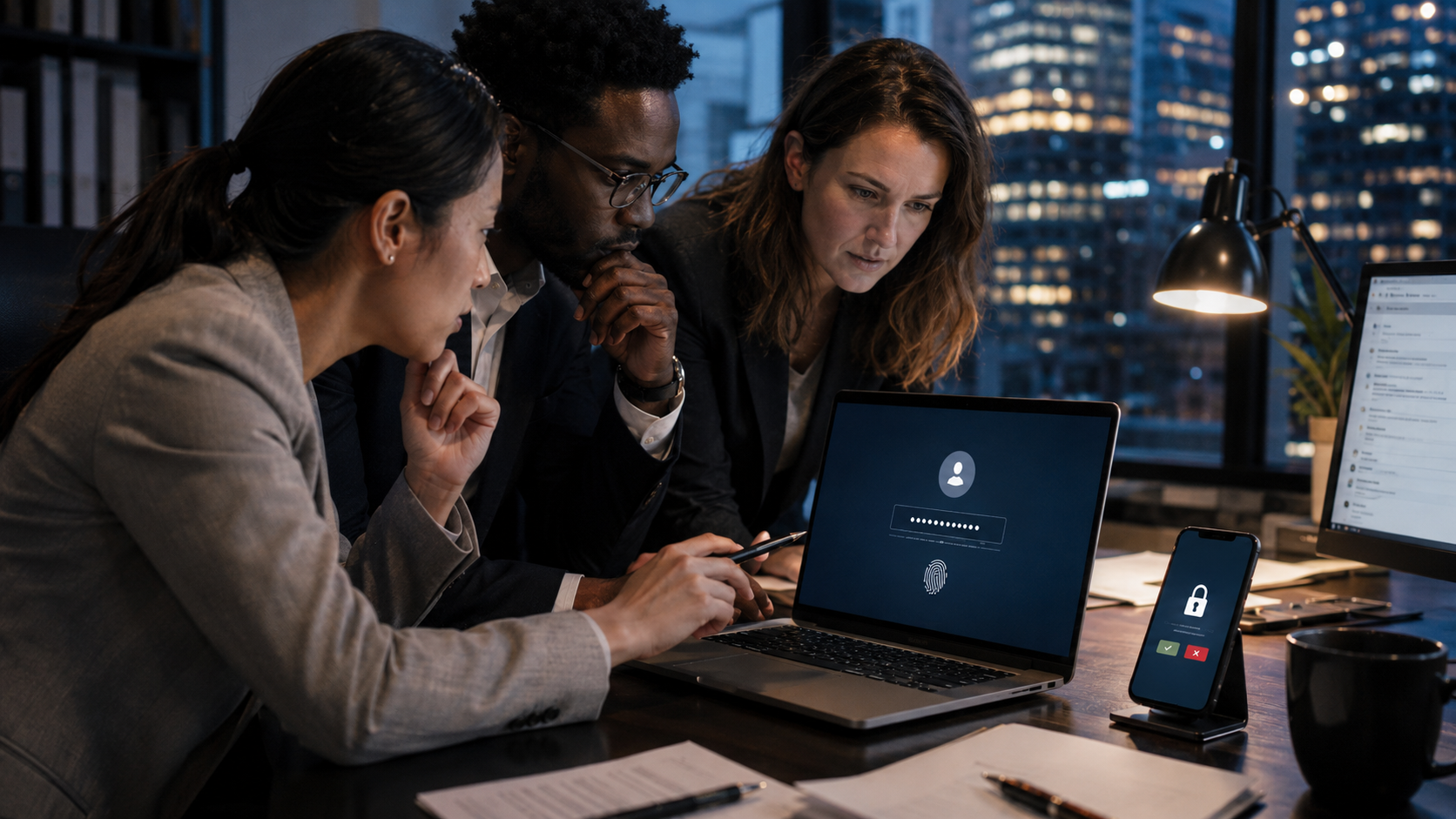
Most people have too many passwords.
There is one for email, another for company software, another for banking, another for customer platforms, and several more for tools used throughout the workday. To make things simpler, many employees reuse passwords, save them in browsers, or choose versions that are easy to remember.
That may feel convenient, but it can also create serious risk.
As businesses rely more on digital tools, communication platforms, and online systems, passwords are becoming one of the most common weak spots in company security.
Why Passwords Create Risk
Passwords are meant to protect access to important systems. But in practice, they are often easy to forget, easy to reuse, and sometimes easy to steal.
A cybercriminal does not always need to break into a company’s entire network. Sometimes, they only need one employee’s login.
That can happen through phishing emails, fake login pages, weak passwords, or reused credentials from another website. Once attackers gain access, they may be able to read messages, steal information, impersonate employees, or move deeper into business systems.
Put another way, a password is often the front door to a company’s digital workplace.
What Is Passwordless Security?
Passwordless security is a way of logging in without relying on a traditional password.
Instead of typing a password, employees may use a fingerprint, facial recognition, a secure device, or a passkey. A passkey is a digital login method that helps verify a user without requiring them to remember or type a password.
A helpful way to think about it is this: instead of proving who you are by remembering a secret word, you prove who you are through a trusted device or secure identity method.
For employees, this can make logging in faster. For companies, it can reduce the risk of stolen or reused passwords.
Why Companies Are Paying Attention
Password problems are not just annoying. They can affect productivity, security, and customer trust.
Employees lose time resetting passwords or getting locked out of systems. IT teams spend time helping users recover access. Managers worry about whether company data is protected. Customers expect businesses to keep their information safe.
When login systems are too difficult, employees may look for shortcuts. When they are too weak, attackers may find opportunities.
That is why more organizations are looking at stronger access controls, multi-factor authentication, and passwordless options. The goal is not to make security more complicated. The goal is to make secure access easier and safer.
Secure Access Starts With Communication
A company’s communication tools often hold some of its most important information.
Customer conversations, internal messages, video meetings, phone records, support requests, and shared files all move through communication systems every day. If the wrong person gains access, the impact can spread quickly.
This is where companies like NEVTIS Corp fit into the larger conversation. NEVTIS helps businesses modernize the way teams communicate through voice, video, messaging, and collaboration tools. As companies become more connected, secure access to those tools becomes just as important as the tools themselves.
UCaaS, or Unified Communications as a Service, brings business phone, video meetings, messaging, and collaboration into one connected system. For organizations using modern communication platforms, protecting user access is an important part of keeping teams productive and customer information safe.
Looking Ahead
Passwords are not disappearing overnight, but the way businesses manage access is changing.
The future of workplace security will likely focus on tools that are both safer and easier to use. That means fewer weak passwords, stronger identity checks, and better protection for the systems employees depend on every day.
For executives, managers, and entrepreneurs, this is a good time to review how employees access business tools. Are passwords being reused? Is multi-factor authentication in place? Are communication platforms protected? Are employees trained to recognize fake login attempts?
The companies that take login security seriously now will be better prepared for a workplace where digital access is central to daily operations.
Tech Today Takeaway: Passwords may be familiar, but they are no longer enough on their own. Businesses that improve login security can better protect employees, customers, and the communication systems that keep work moving.