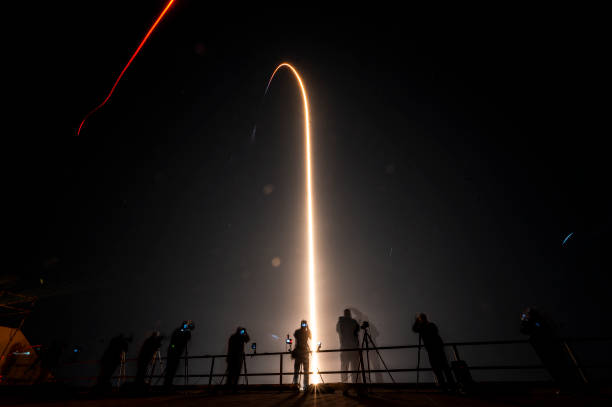
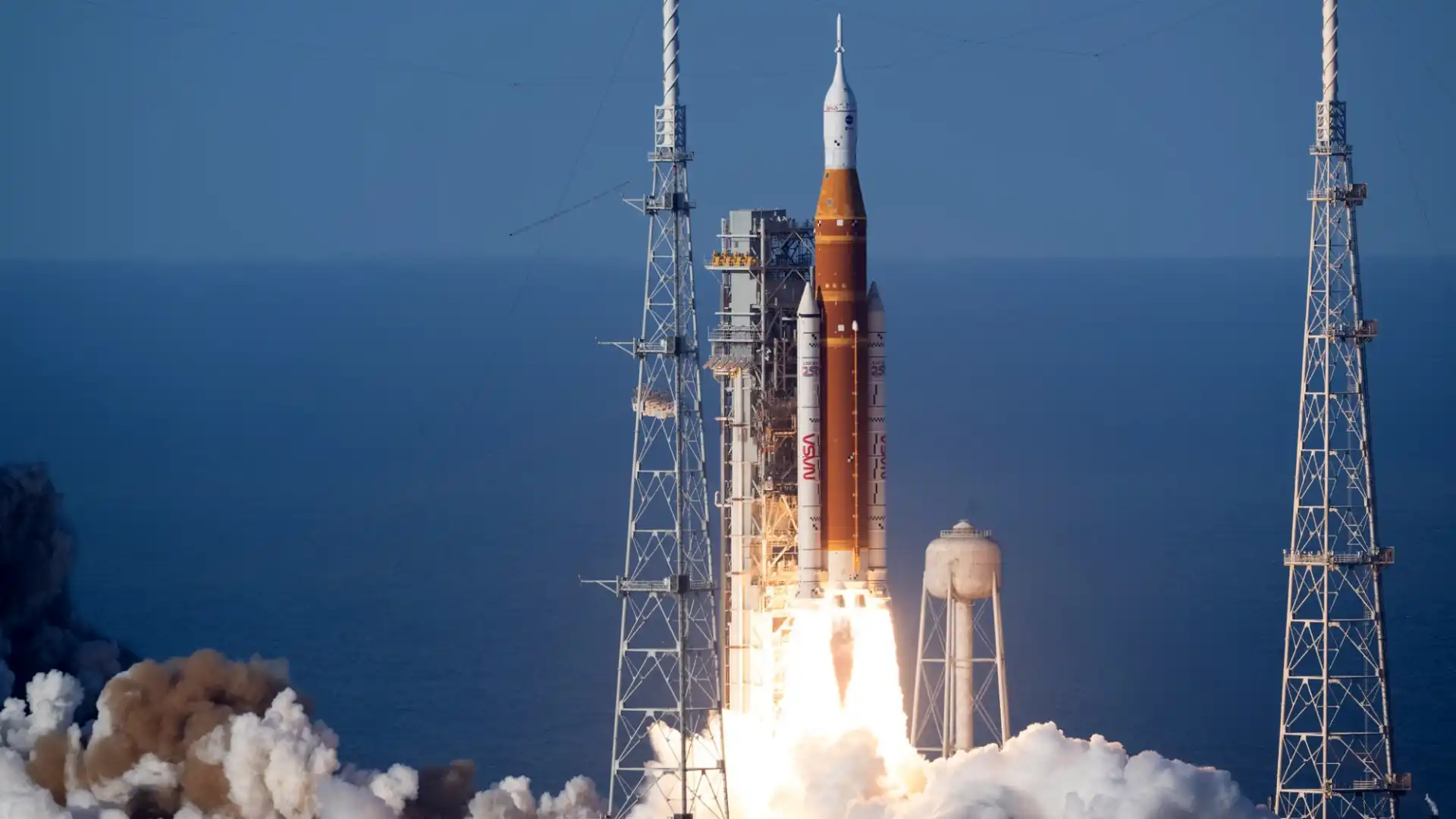
In April 2026, NASA’s Artemis II mission marks a historic milestone—50 years after the last crewed mission to the Moon. This mission is not about landing; it’s a ten‑day test flight that will send four astronauts on a lunar flyby to validate the systems and procedures needed for future lunar landings. The long‑term vision, however, goes far beyond this single mission: NASA aims to establish permanent bases on the Moon by the 2030s, turning the lunar surface into a scientific laboratory, a staging post for Mars, and a hub for economic and strategic activities in space.
The Artemis II Mission: A Crewed Flyby for Future Landings
Artemis II is the second flight of the Space Launch System (SLS) rocket and the first crewed mission of the Orion spacecraft, making it the first crewed mission beyond low Earth orbit since Apollo 17 in 1972. The mission, launched from Kennedy Space Center, carries four astronauts—NASA’s Reid Wiseman, Victor Glover, Christina Koch, and Canadian Space Agency astronaut Jeremy Hansen—on a free‑return trajectory around the Moon before returning to Earth.
The primary goal of Artemis II is to demonstrate the capabilities of the crew and systems in deep space. Astronauts will test life‑support, navigation, and communications in real‑flight conditions, while NASA evaluates the performance of the SLS/Orion stack. This mission is designed to ensure that the technology and procedures are ready for Artemis III and beyond, which aim to land humans on the lunar surface in the late 2020s.
The Purpose of Permanent Lunar Bases
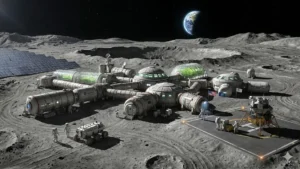
The Artemis program is not just about revisiting the Moon; it’s about creating a sustained presence there. NASA’s long‑term goal is to build a semi‑permanent lunar base at the Moon’s south pole, a region rich in water ice and other resources. This base will serve as a hub for scientific research, a training ground for Mars missions, and a platform for economic and strategic activities in space.
Scientific Research and Exploration
Lunar bases will enable long‑term scientific research that was impossible during the short Apollo missions. The Moon’s surface preserves ancient rocks and impact records that provide insights into the early history of the solar system and Earth. Bases will allow astronomers to conduct observations from the lunar surface, particularly from the radio‑quiet far side, and to study the Moon’s geology, interior, and the effects of cosmic radiation.
A Staging Point for Mars and Beyond
The Moon is an ideal testing ground for Mars missions. From a lunar base, astronauts can practice living in partial gravity, using in‑situ resources, and operating in harsh environments, all much closer to Earth than Mars. This experience will be crucial for preparing for the long‑duration missions required for Mars exploration.
Access to Lunar Resources
Water ice found in the Moon’s polar regions can be split into oxygen and hydrogen for breathing air and rocket propellant. This will reduce the need to launch resources from Earth, making deep‑space missions more cost‑effective. Other minerals and materials on the Moon could be used for construction and manufacturing, supporting a growing lunar economy.
Economic and Strategic Opportunities
Permanent lunar bases could open up new economic opportunities, including mining, 3D‑printed construction, and space tourism. They will also give countries and alliances a strategic foothold in space, influencing space policy, governance, and security. As other nations like China pursue their own lunar ambitions, a sustained presence on the Moon will be crucial for maintaining leadership in space exploration.
The Roadmap to a Permanent Lunar Presence
NASA’s plan for sustained lunar exploration involves a phased approach. Initial missions will deploy satellites and autonomous rovers to explore the lunar surface, identify resource‑rich areas, and confirm the presence of water. Robotic missions will prepare landing sites by leveling the ground and solidifying the dusty surface, minimizing damage from lunar dust during landings.
Following these preparatory missions, human landings will begin, with Artemis III marking the first crewed return to the lunar surface since Apollo. Subsequent missions will focus on building and expanding the lunar base, with the goal of achieving a semi‑permanent human presence by the 2030s. This long‑term vision will lay the groundwork for future missions to Mars and beyond, transforming the Moon into a cornerstone of humanity’s spacefaring future.
Conclusion
Artemis II represents the first step in a new era of lunar exploration, a 50‑year gap since the last crewed mission to the Moon. While this mission focuses on testing systems and preparing for future landings, its ultimate purpose is far more ambitious: to establish permanent bases on the Moon that will serve as scientific laboratories, staging posts for Mars, and hubs for economic and strategic activities. As humanity looks to the stars, the Moon will once again become a place where dreams of exploration and discovery are realized.