The Line: Saudi Arabia’s $500B Mirror City Dream—Scaled Back to 2.4 km Reality
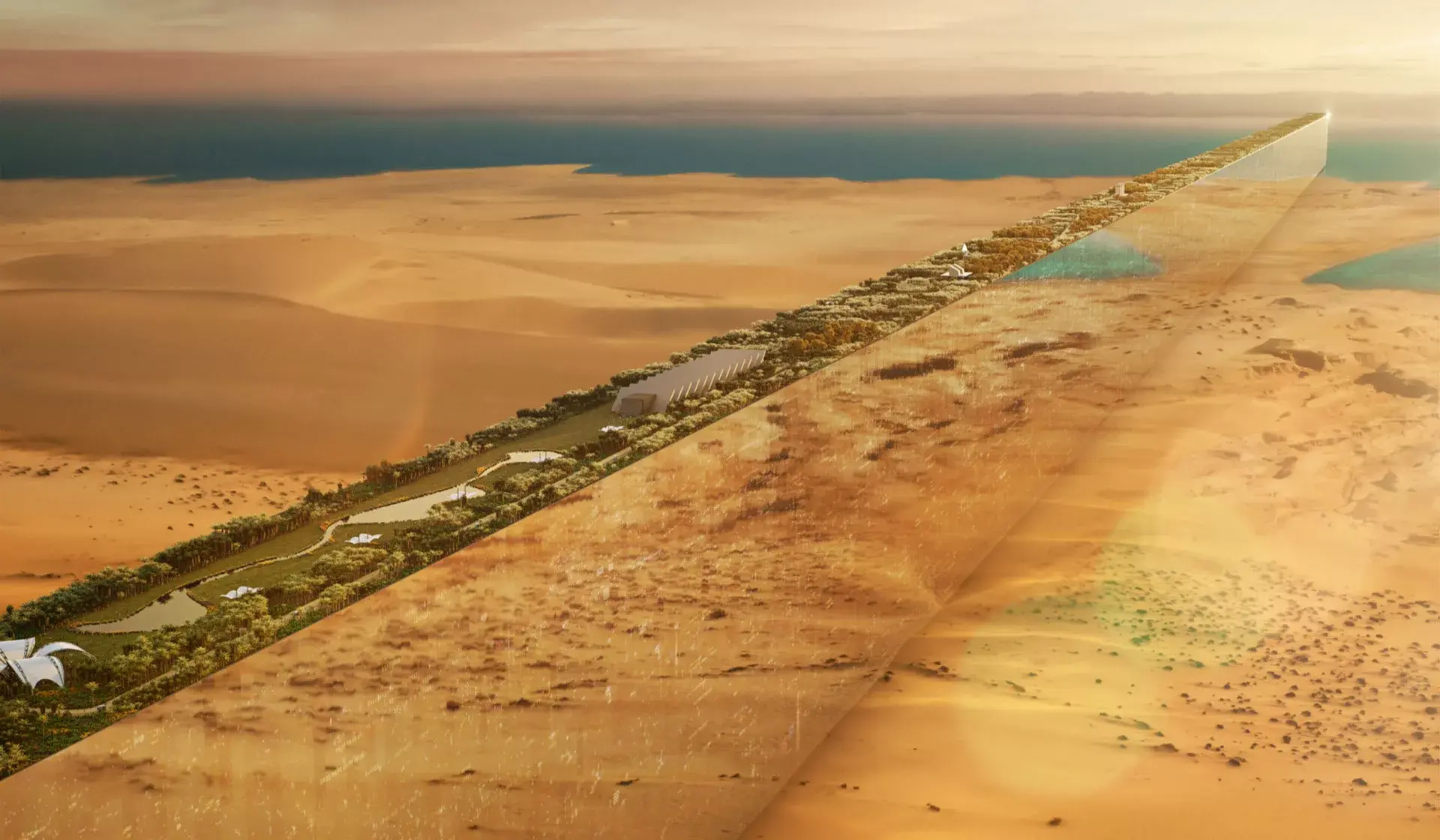
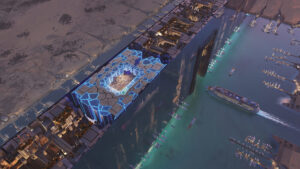
Imagine a 170 kilometers long mirror slicing through the desert of Saudi Arabia, reflecting a futuristic vision. Picture two towering skyscrapers, 500 meters tall, housing 9 million car-free residents, all powered by zero emissions. This is part of the ambitious vision for the 500b NEOM megacity in Saudi Arabia. The Line, the crown jewel of the $500 billion NEOM project, pitched by Crown Prince Mohammed bin Salman as the “city of the future,” but scaled back to only 2.4 km by 2030. Can such megaprojects deliver on their promises? The Line symbolizes bold innovation but exposes the limits of top-down urbanism amid rising costs, technological barriers, and geopolitical considerations, especially in the context of the 500b NEOM megacity.
The Grand Vision: What The Line Promised
Core Specifications of NEOM’s Futuristic Megacity
The Line is an ambitious NEOM project in Saudi Arabia, redefining urban living with key specifications outlined below. It aims to house 9 million people without the need for cars, roads, or streets.
| Feature | Specification |
|---|---|
| City Design | 170 kilometers linear city |
| Skyscraper Dimensions | The Line, stretching 170 km long, 200 m wide, and 500 m tall, is a key feature of the 500b futuristic NEOM megacity. |
Key Features of the Mirror City Design
Key features of this ambitious city in Saudi Arabia include:
| Feature | Details |
|---|---|
| Transport System | Hyperloop-style system utilizing pods traveling at speeds from 0 to 500 kilometers per hour. |
| Sustainability | Full recyclability and a commitment to renewable energy through solar, wind, and hydrogen power. |
It also promises AI governance and vertical farming, making it a futuristic megacity.
Philosophy Behind the Car-Free City Concept
The philosophy behind the car-free city concept is rooted in a “zero carbon, zero waste, 15-minute city” ethos aligns with the vision for the 500b futuristic NEOM megacity.Where privacy concerns are addressed, the 500b NEOM megacity aims to set new standards for urban living. 95% of the natural environment is preserved. The design blends advanced technology with Bedouin heritage. The goal is to create a futuristic urban environment that is both innovative and sustainable, powered entirely by renewable power.
Technology and Innovation at the Core
Architectural Marvels of The Line
The Line presents architectural marvels, including a climate-controlled “smart shell” utilizing mirrored glass for passive cooling. Drone deliveries and robotics will handle maintenance. Construction has advanced, aiming for innovative, smart cities. The 500 billion dollar NEOM megacity strives to push technological boundaries, but faces scalability challenges as progress continues.
Energy Blueprint for a Sustainable Future
Here’s how NEOM envisions a sustainable future, with key elements like:
- 100% renewable energy, aiming for 5 GW of solar power plus green hydrogen.
- Integration of AI for resource optimization.
As a megaproject, this showcases its commitment to environmental stewardship and innovation, ultimately striving for carbon neutrality and redefining sustainable urban planning.
Revolutionizing Urban Mobility in NEOM
NEOM plans to revolutionize urban mobility through high-speed rail, autonomous pods, and vertical elevators. Eliminating cars reclaims space for parks and public realms. It is a shift to foster sustainability. The completion of infrastructure will pave the way for a car-free city. This transformation aligns with the project’s ambition to create a futuristic city.
Economic Backbone: Funding the $500B Dream
NEOM’s Investment Landscape
The NEOM project, a beacon of innovation in Saudi Arabia, operates with The project is backed by substantial financial resources, primarily from the Saudi Public Investment Fund (PIF), to support the vision of the 500b NEOM megacity.. This 500 billion dollar megacity initiative attracts global partners, including technology giants like Oracle and Siemens, fostering a collaborative ecosystem. The infrastructure and groundwork for this ambitious futuristic megacity are heavily dependent on continued investment to maintain progress and scale.
Job Creation and Economic Diversification
The 500 billion dollar NEOM project, central to Saudi Arabia’s Vision 2030, aims to drive job creation and economic diversification away from oil. Through tourism, biotech hubs, and data centers, the project aims to generate 1.6 million indirect jobs. This shift is pivotal for the Kingdom’s sustainable future. The completion of this megacity will redefine the employment landscape in Saudi Arabia, promoting growth beyond traditional sectors.
ROI Projections and Revenue Models
ROI projections for NEOM anticipate attracting 5 million tourists annually, positioning it as a premier futuristic megacity in Saudi Arabia. However, critiques point to unproven revenue models and over-reliance on foreign investment. The success of the 500 billion dollar project hinges on realizing these tourism goals and establishing diversified income streams to validate its ambitious scale and ensure long-term financial sustainability. The futuristic city aims for significant economic impact by 2030.
Hurdles and the Scale-Back Reality
Cost Overruns and Financial Challenges
Cost overruns represent a significant challenge for the 500 billion dollar NEOM project. Initial estimates have ballooned, raising concerns about financial feasibility. Reports indicate that the cost per kilometer of construction far exceeds initial projections, impacting the overall viability of the 170 kilometers linear city. Managing these escalating expenses is crucial for NEOM to maintain progress towards its ambitious goals and secure a sustainable financial future for the project in Saudi Arabia.
Technical Impossibilities and Engineering Feats
The NEOM project faces considerable challenges as it strives to meet its ambitious goals for the 500b futuristic city by 2026. The project is facing technical hurdles that could impact the timeline for the 500b NEOM megacity.. Engineering feats like mountain tunneling and ensuring seismic stability in the desert present complex challenges. Securing the supply chain for the mirrored facades across 170 kilometers poses logistical and material sourcing difficulties. Overcoming these technical impossibilities requires innovative solutions and rigorous project management to keep the futuristic megacity construction on track and ensure a groundbreaking infrastructure development.
Human and Environmental Costs of Construction
The human and environmental costs of construction have drawn scrutiny to Saudi Arabia’s ambitious NEOM project. Worker deaths and wildlife displacement, despite “nature-positive” claims, raise ethical concerns. Balancing the desire for a futuristic city with responsible environmental stewardship and worker welfare is crucial for NEOM’s long-term sustainability and public perception as the project progresses towards its 2030 completion.
Broader Implications: Lessons for Future Cities
Sustainability Critique of The Line’s Design
The sustainability of The Line in Saudi Arabia It faces critique despite its substantial financial backing, primarily from the Saudi Public Investment Fund (PIF), as it aims to realize the ambitious goals of the 500b NEOM megacity. ambitious These goals are integral to the development of the 500b NEOM megacity. Is true zero-emission possible? The massive use of concrete and steel during construction offsets some gains. Water scarcity in the arid zone further complicates the megaproject‘s environmental claims, questioning whether the 9 million people can live sustainable lives in such a futuristic city.
Geopolitical Considerations in Saudi Vision 2030
The Line project‘s role in Saudi Arabia‘s Vision 2030 reflects its importance in regional soft power. Western firms, however, have exited due to ethical concerns and human rights issues. How does NEOM navigate these geopolitical considerations while constructing a futuristic megacity that aims to redefine urban Is living in a 500b futuristic city like NEOM a viable option by 2025?
Global Parallels: Innovation vs. Hubris
Similar megaprojects worldwide, like China’s linear city Concepts like Elon Musk’s Mars habitats echo The Line’s blend of innovation and sustainability in the 500b NEOM megacity. innovation and potential hubris. Does the Line project‘s reduced scale suggest humility or a temporary setback? As construction has advanced, the world watches whether NEOM can balance grand visions with practical realities. The 170 kilometers A city in Saudi Arabia, the 500b NEOM megacity aims to redefine urban living with its futuristic designs. wants to redefine futuristic urban.
Conclusion: A Mirror to Our Urban Future
Recap of The Line’s Ambition and Challenges
The Line project‘s ambition to create a futuristic city designed for 9 million people in Saudi Arabia inspires, but its scale-back underscores execution gaps. High costs, technological hurdles, and ethical concerns have reshaped its trajectory. The ambitious neom vision now faces the reality of progress Towards a vision of a 500b futuristic city, the Line is a crucial element in the development plan. sustainable model, the 9 million people and aiming for a car-free city.
Forward Look: The Future of Modular Urban Design
The Line project could evolve into a modular prototype, influencing compact cities worldwide. Its emphasis on renewable energy and high-density living offers lessons for sustainable urban planning. Can the NEOM project set a precedent for future smart cities, even in a scaled-down form? As the construction is underway, the world could see a sustainable and futuristic megacity.
Call to Action: What Mega-Projects Inspire You?
What megaprojects excite you? Is it NEOM, Hyperloop, or something else? The conversation around ambitious endeavors like the Line project in Saudi Arabia fuels innovation. Share your thoughts and contribute to shaping the future of urban development. The A futuristic city designed to incorporate the principles of the 15-minute city is part of the 500b NEOM megacity. is worth 500 billion and would aim to redefine what is urban.